
Resume vs LinkedIn: Which One Actually Gets You Noticed?
In today’s competitive job market, students often ask:
“Do I really need LinkedIn if I already have a resume?”
or
“Is LinkedIn more important than a resume?”
The truth is simple:
👉 It’s not Resume or LinkedIn.
👉 It’s Resume and LinkedIn.
Let’s break it down strategically.
The Role of a Resume: Your Application Tool
A resume is still essential. It is your formal document for job applications.
When you apply for internships or jobs, recruiters use resumes to:
- Evaluate your qualifications
- Check your academic background
- Review your skills and experience
- Filter candidates through ATS (Applicant Tracking Systems)
Your resume helps you apply smartly.
However, there’s one limitation:
A resume only works when you submit it.
If you’re not applying, it’s not working for you.
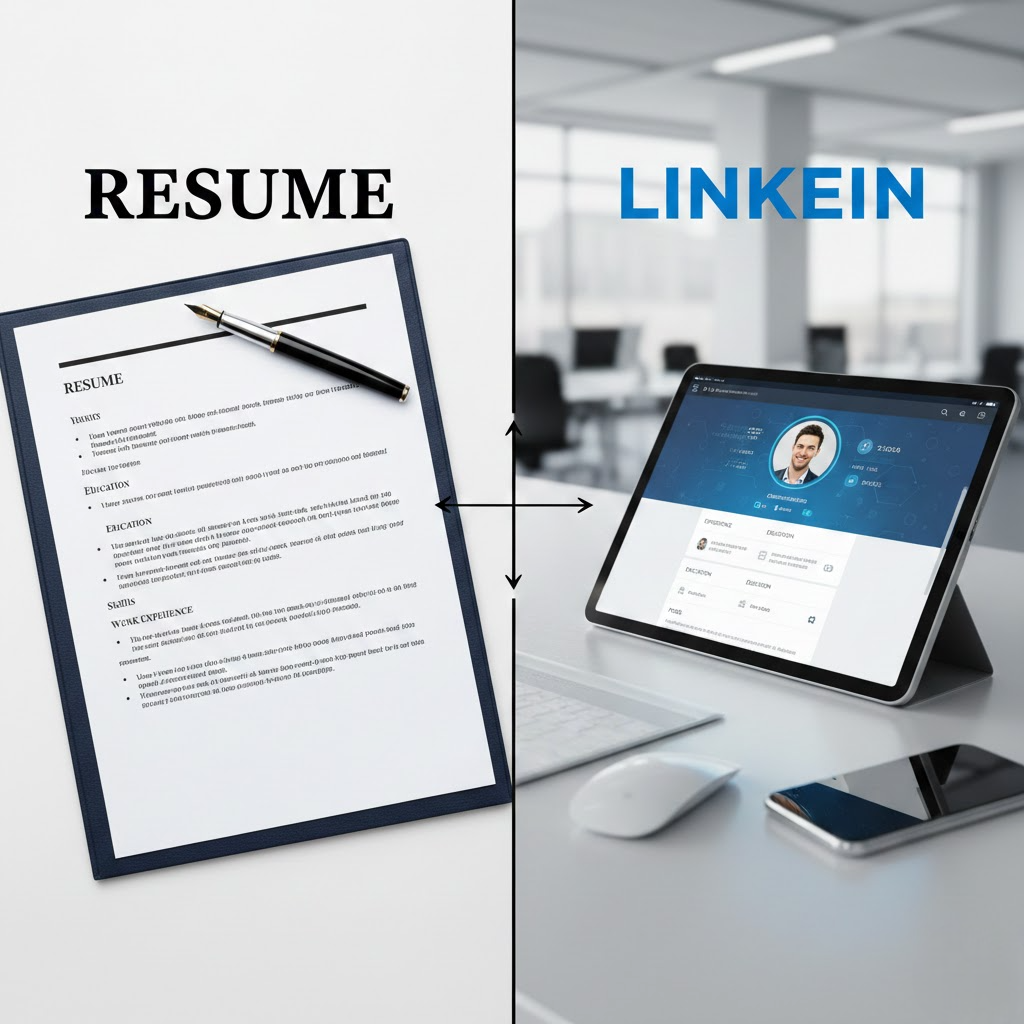
The Role of LinkedIn: Your Visibility Engine
Now let’s talk about LinkedIn.
Recruiters don’t just wait for applications anymore.
They actively search for candidates.
LinkedIn allows you to:
- Be discovered by recruiters
- Build a professional online presence
- Showcase projects and certifications
- Network with industry professionals
- Demonstrate thought leadership
Your LinkedIn profile helps you get discovered.
If your profile is incomplete or inactive, you are invisible to opportunity.
The Biggest Mistake Students Make
Many students:
❌ Create a basic resume and stop there
❌ Open a LinkedIn account but never optimize it
This creates two problems:
- Their resume gets filtered out by ATS systems.
- Their LinkedIn profile doesn’t appear in recruiter searches.
In today’s hiring environment, visibility + optimization matter more than ever.
How Recruiters Actually Hire Today
Modern hiring follows two main paths:
1. Application-Based Hiring
You apply → Recruiter reviews your resume → You get shortlisted.
2. Search-Based Hiring
Recruiter searches LinkedIn → Finds optimized profiles → Reaches out directly.
If you only rely on applications, you’re competing with hundreds of candidates.
If you optimize LinkedIn, you create inbound opportunities.
Smart candidates position themselves in both pipelines.
Resume vs LinkedIn: Key Differences
| Resume | |
|---|---|
| Used when applying | Used to get discovered |
| Static document | Dynamic online profile |
| 1–2 pages | Expanding professional portfolio |
| Customized per job | Always visible 24/7 |
| Sent privately | Public professional branding |
Both serve different purposes. Together, they create a powerful career strategy.
What Makes a Strong Resume in 2026?
- ATS-friendly formatting
- Keyword optimization
- Quantified achievements
- Clear structure and readability
- Tailored to specific roles
A resume is no longer just a document.
It’s a marketing tool.
What Makes a Strong LinkedIn Profile?
- Professional headline with keywords
- Strong “About” section
- Skills aligned with industry demand
- Featured projects or portfolio links
- Consistent engagement
Your LinkedIn profile is your personal brand.
The Smart Strategy: Use Both
The most successful students and young professionals:
✔ Apply strategically with optimized resumes
✔ Stay visible with strong LinkedIn profiles
✔ Network actively
✔ Showcase real-world projects
They don’t wait for opportunities.
They position themselves for them.
Final Thoughts
If you’re serious about career growth, stop asking:
“Which one is better?”
Start asking:
“How can I optimize both?”
Because in today’s job market, talent is important —
but visibility and positioning are powerful.
Need Help Building Both?
At FutureEd Consulting, we help students:
- Create ATS-friendly resumes
- Optimize LinkedIn profiles for recruiter searches
- Build strong professional portfolios
- Prepare for internships and job placements
Ready to get noticed?
📩 Contact us today for a personalized profile-building consultation.